
In previous decades, among the main themes of Belarusian plays the most frequently mentioned were the miscommunication of characters, total loneliness, everyday hopelessness, existential longing, and the search for the meaning of life and one’s place in a world of chaos.
The key themes of the newest Belarusian plays, however, illustrate a discourse about:
- contemporary Belarus and Belarusians who live in the country and beyond its borders;
- recording the split in Belarusian society;
- the human confrontation with the system, its absurdity;
- the violation of human rights and violence against a person who may be a political prisoner, a refugee at the border, a migrant or a ghetto dweller;
- public loneliness;
- Belarusianness–Europeanness, language as a marker of identity.
The last of the listed themes is connected both with the difficulties of adapting to a new environment, with the search for one’s own voice, and with the levelling of individuality or the loss of (self-)identification in new circumstances.
The problem of identity
Authors try to capture a social cross-section of society at different times and at the same time reflect the problems of a particular human fate. The plays present different sides: ordinary people-citizens who are content with everything, representatives of civil society with humanistic values, representatives of the authorities with appalling methods of suppression. The immersion in events is sharpened by the overlapping of times, by turning to the recollections of eyewitnesses.
For contemporary Belarusian plays, as for many dramatic works of the 19th – early 20th century, the opposition of images in the “us–them” system is characteristic.
Moreover, in past times “one of us” was the bearer of certain principles and values, who defended the interests of his native land, and any of his deeds done not from the heart but for material gain could be regarded as crimes. The “outsider” is not only a foreigner but also one who adapts to circumstances, thereby betraying both himself and others. In the playwriting of the 2020s this opposition has sounded again. In plays with protest themes, the role of outsiders is played by supporters of the authorities or those who did not express their position. In plays with émigré plots, Belarusians who have come to Europe often appear as “outsiders”, and in order to become “one of us” in the new society, the characters are forced to reconstruct their identity.
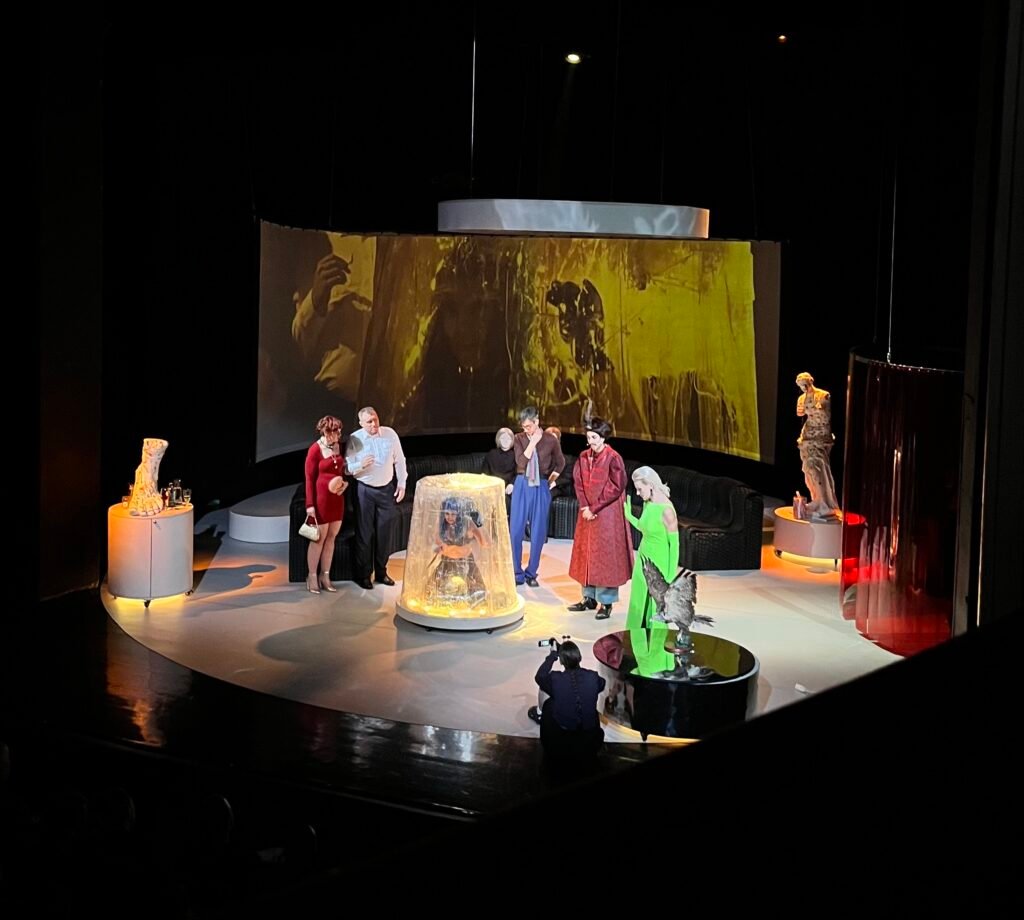
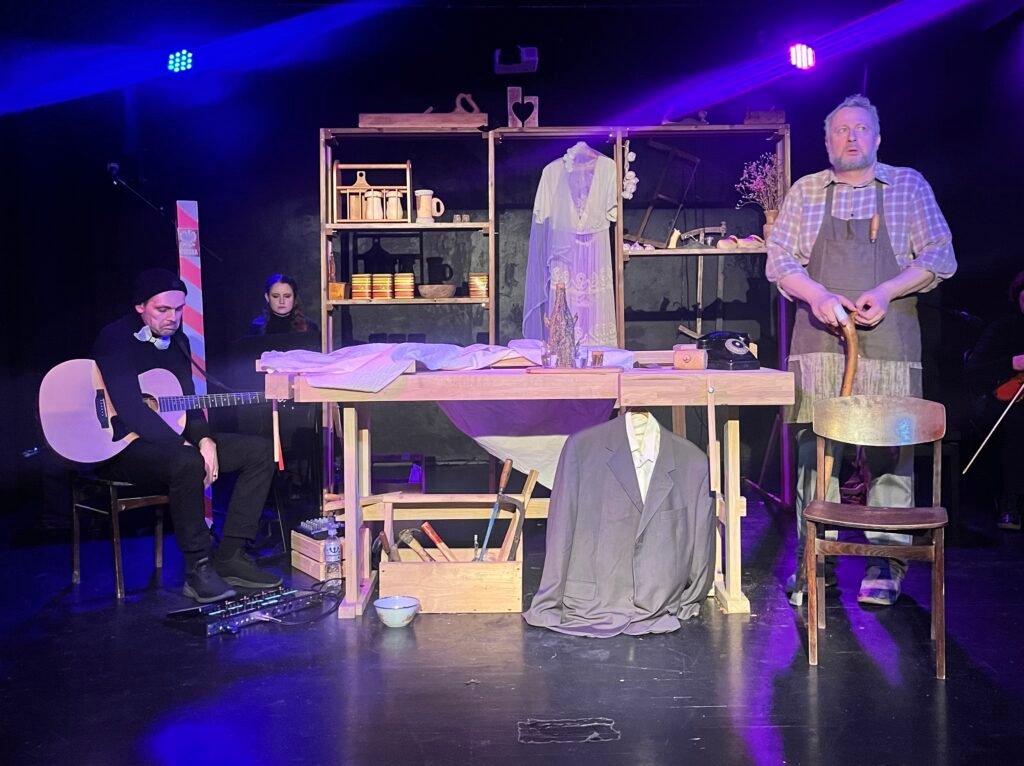
Among Belarusian plays of the 2020s there is a series of works in which references to recent events — events associated in the minds of people from Belarus with the protest-and-revolution period — appear directly or indirectly (“Insulted. Belarus(sia)” by Andrei Kureichyk, “Half a Year” by Kasia Chekatouskaya, “Maryia’s Neighbours” by Maryia Bershadskaya, “Little Ribbons”, “SEXTILIS (Dialogues of August)”, “Tikhari” by Sasha Filipenka, “Extremists” by Yulia Tsimafeeva, and others). There is also a series of plays in which the shadow of the protests persists as a through-theme, via reflections on the consequences of revealing one’s civic stance and the impossibility of accepting what happened in those months in Belarus (“Straight Home — 10 Hours’ Drive” by Zhenia Davidzenka, “The Carpenter” by Volha Karalyonak, “Limbo” by Renata Talan).
Dramatic texts as a space of memory
In the plays of the 2020s, authors actively turn to different aspects of the theme of memory. In such works the dramatic action is built as an act of memory, in which a private story takes on the features of collective experience and a dialogue with the past – from the traumas of the Soviet era and the events of the Second World War to the recent protest-and-revolution wave and life in emigration or exile.
Moreover, the characters try to detach themselves from the past in order to live on, because the traumatic past experience does not allow them simply to forget — the past is recalled and continues to resonate within, reminding them of itself physically (at the level of the body) and mentally (the plays “Half a Year”, “A Bee in the Throat”, “Straight Home — 10 Hours’ Drive”, “Zła krew” (“Bad Blood”) by Yauheniya Balakirava, “Dark Room” by Mikita Ilyinchyk, “The Last Witness [of Old Hrodna]” by Amaliya Ryznich, “With My Own Body” by Hanna Komar, “Extremists”, “Any Place Where Traces Remain” by Maryia Bialkovich, and others). Hence so much focus on the “here and now”, on the emotions and sensations the characters feel — as if attempts to live through, comprehend and overcome the traumas of memory (“trauma studies”), or perhaps to erase from memory all recollections of something terrible, as in the play “Any Place Where Traces Remain”, where the main character repeatedly says: “I don’t remember”, when she tries to recall but only vaguely senses it. Or events are not fixed in memory because of being passed over in silence within the family or at the all-state level, as in the play “Zła krew”:
“Mum, how old were you during the Chernobyl disaster? – Four. – Do you remember anything from that moment? – Nothing. Nothing specific. – Do you have some gap in your memory, or…? – Nothing. In our family it wasn’t talked about. I only learned about the disaster in history lessons.”
and “UNPACKING” by Mikita Ilyinchyk:
“So tell me, what did your grandfather do? – How should I know? He was in the Home Army, a partisan; I sat on his lap and read him poems. That’s all.”
The documentality of the texts
For a topical representation of the themes of individual memory, social memory and collective memory, the authors of many plays incorporate various documentary sources into fictional plots: correspondence with friends and relatives in messengers, reports from media outlets, archival materials, internet links to video recordings, advertisements, song recordings, screenshots of real databases or reviews of specific places. The inclusion of the listed elements creates a distinctive visual form, makes it possible to significantly expand the space of dramatic action, and gives the works additional contexts. From the types of included elements it is noticeable in some texts that the process of their creation is “inseparably” linked with the gathering of research material, with an in-depth analysis of various sources. Interestingly, authors have begun to indicate at the end of the play texts the sources they relied on when creating the works.
In a number of plays, traumatic experience is reproduced through the prism of autofiction: personal memory becomes the main documentary testimony, and the structure of the text takes the form of letters, diaries, recollections, lyrical confession, filled with an open, intimate intonation and a poetic atmosphere.
Tellingly, many texts are permeated with a feeling of fear — so much so that fear becomes, as it were, a character in the plays.
This is not only fear of brutal violence at the hands of the security forces and of punishment for a civic stance, but also a feeling of unceasing anxiety, powerlessness and helplessness of many people in the face of the unknown of their future. And this motif of fear arises in texts about the protests and beyond: “I’m scared, I don’t know what to do” (“Pygmalion” by Andrzej Błażewicz and Mikita Ilyinchyk); “Because hopelessness was enveloping me, I was scared. Scared” (“Say Hi to ABDO” by Mikita Ilyinchyk); “I have never gone back to live in my home city since then… Fear won’t let me” (“The Last Witness [of Old Hrodna]”); “It’s impossible to stay in this fear as long as we do” and “We live in a terrible fairy tale and still can’t wake up, complete the hero’s journey, walk the circle to the end” (“I Will Come Out of the Forest, Take Out My Spine, and It Will Serve Me as a Sword”); “I wasn’t afraid to act. It was terrifying to watch. Imagine: you go to the theatre, and there are coffins, gas masks, terrifying masks, talking puppets, and all of it against the backdrop of the crumbling walls of the Kremlin?” (“Zła krew”), and others.
The performative element of Belarusian playwriting
The performative element continues to manifest itself vividly in the newest texts. Through close attention to gesture, to plastic and verbal action, to corporeality and the possibilities of the body, the characters gaze into and deeply immerse themselves in their own inner world, and time is rethought (“Half a Year”, “A Bee in the Throat”, “Straight Home — 10 Hours’ Drive”, “The Last Witness [of Old Hrodna]”, “With My Own Body”, and others). As a vivid example one can cite the text “I Will Come Out of the Forest, Take Out My Spine, and It Will Serve Me as a Sword”, written so sensuously that the heroine’s hair, skin, face, bones, breasts, arms and legs can easily be perceived as acting characters. In this drama / “poem, speech, lament” / voice message with secret thoughts and fears, there are many accents on bodily sensations. The image of legs alone is mentioned 33 times in this small-volume play:
“A friend told me that when they shoved her into a police van during the protests, she tried to calm down and breathe and return to her body. The only one she has. I think about her legs, standing on the floor next to others. Sneakers, boots, shoes. A moment ago they were running, now stopped. If only there were no blood anywhere. But most likely there was.”
In the plays one can also notice a performative impulse through the emphasis on the sounding of different voices, on the connection of the characters’ utterances with their inner voices and the polyphony of other people at different times. For example, the author of the play “Inferno. Traditions” is an acting character whose reflection we read, whose voice we hear on a par with the voices of different eras (the poet Ales Dudar, officials and representatives of the security structures of the repression period of the 1930s, a contemporary recording of an announcer’s voice in the Minsk metro and trams). In the play “With My Own Body” character A represents the voice of the main heroine in the present tense, while Yu represents all the other voices; and in “Any Place Where Traces Remain” a Chorus appears, made of the voices of neighbours and of sounds. In “Zła krew”, besides the various voices — including those recorded in a personal diary, in internet articles, or invented — at the end of the play the heroine screams:
“I’m standing in my Khrushchev-era kitchen, two by two metres, looking at my reflection in the microwave, and a scream tears out from inside me. Inhuman. It seems I have never screamed like that in my life. A scream from nowhere, requiring no signal from the brain.”
In the play “I Will Come Out of the Forest, Take Out My Spine, and It Will Serve Me as a Sword” the theme of the prohibition on expressing one’s own individuality in various manifestations of life unfolds through the words “voice”, “speak”, “shout”, “stay silent”, “answer”, which are mentioned almost 50 times. The expression of one’s emotions through a scream as a defence of one’s rights: “You’re a siren. Screaming down the whole street. So what. That’s allowed too, if you want. You can be loud. You have the right to speak. You have the right to scream.”
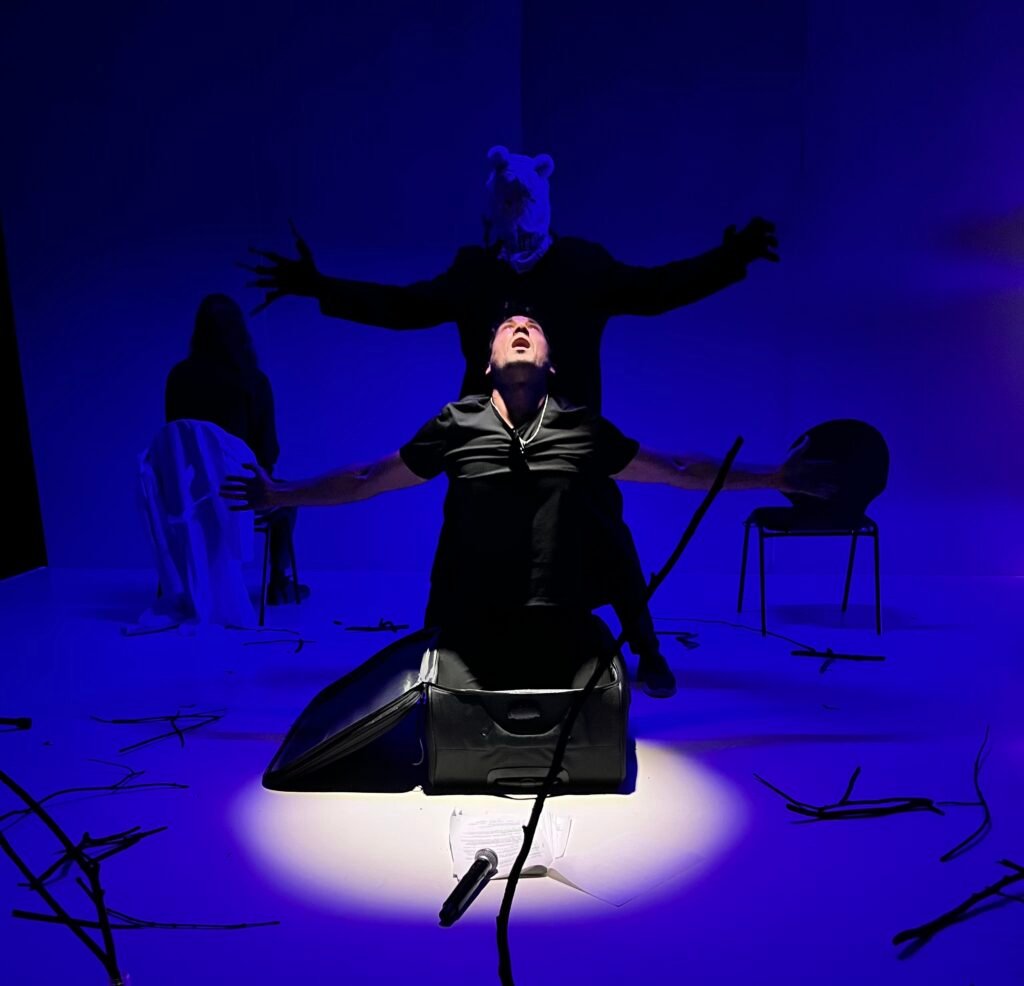
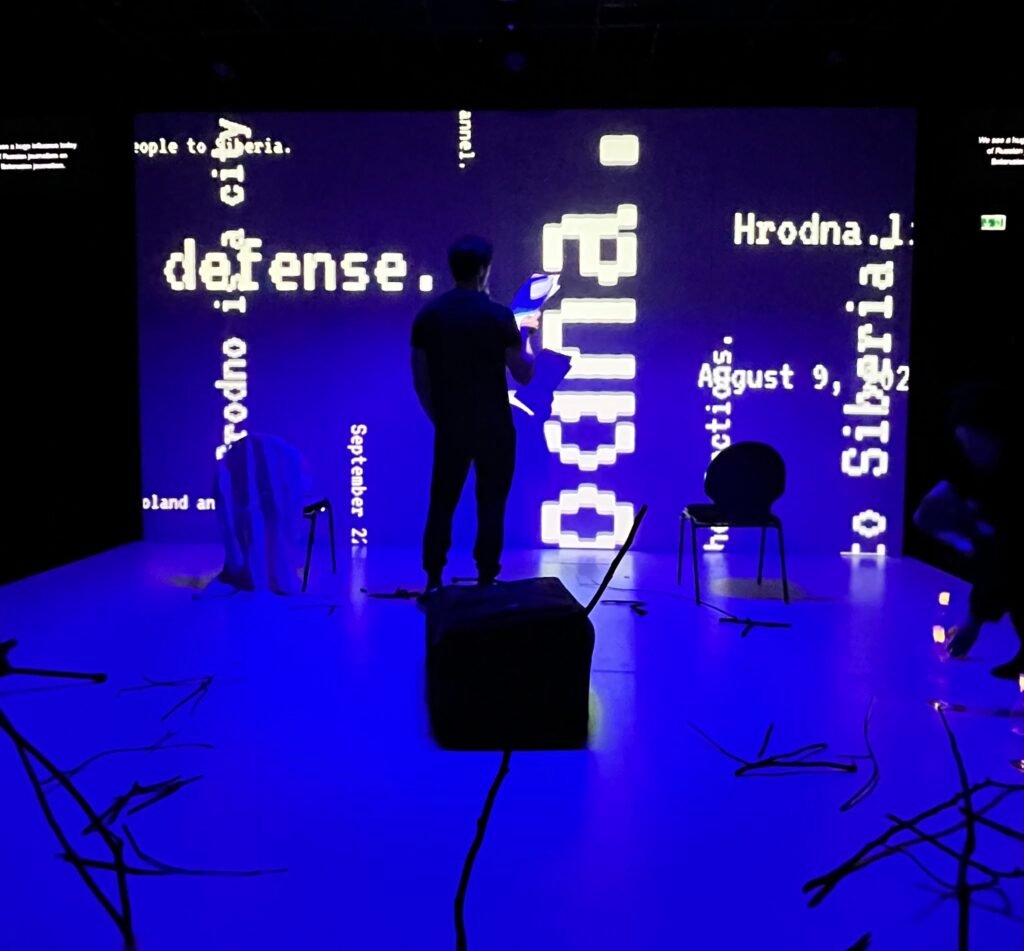
In Belarusian playwriting of the 2020s there is an important mission — to explore the inner state of Belarusian men and women, their existential choices in a period of socio-political transformations.
In a number of dramatic texts the authors, rethinking what has happened, help to live through, to grieve, to free oneself from the traumas of a nation that will remain in Belarusian society for a long time yet; they remind us of the value of the life of a single person, they reflect on the themes of how to live in the given circumstances, when different ideologies and convictions clash, when people are divided according to the “us–them” principle.
It is very important that the newest Belarusian plays are a certain form of therapy and political activism. This is clearly manifested during public readings, when viewers may be deeply moved, and at the discussions they reflect on how political or apolitical the texts are.
Author’s photos | Cover photo: Gdański Teatr Szekspirowski (Gdańsk Shakespeare Theatre).