
Between home and the future: new voices of the stage
At the centre of the programme are plays written after 2020: about trauma, exile, adaptation, the severing of ties, the migration crisis. These texts capture the experience of a community in a state of liminality and form a new cultural memory. Staged readings have ceased to be a mere presentation of a text. They combine directorial inventiveness, the art of acting and visual solutions, turning into an independent, spectacular genre. Such events play the role of cultural infrastructure in exile: they compensate for the loss of national institutions and form a transnational space of cooperation between Belarusians, Ukrainians and Poles.
An analysis of the Belarusian dramatic texts presented at these events shows that they all centre on a single thematic dominant — the events of 2020, collective trauma and its long-term social, psychological and cultural consequences. The corpus of plays can be conditionally divided into four categories.
- Inward testimony plays. Texts devoted to the lives of those who stayed in Belarus raise questions of making sense of repression, violence, everyday survival, the existential enclosure of space.
- Diasporic identity plays. Texts about those who left: adaptation, alienation, the loss of linguistic and cultural support, the building of a new identity.
- Liminal border-space plays. About life “in between”: between two countries, two times, two freedoms/unfreedoms; about the stasis of life and constant movement with no place.
- Speculative crisis plays. Texts, or individual episodes of them, that do not describe the past but model its consequences — for example, the migration crisis on the Belarus–Poland border; predictions, dystopias, scenarios of possible political transformations.
Inward testimony plays
Three plays, as well as the staged readings based on them, can be assigned to this section. In their works the authors examine, from different angles and in a variety of artistic forms, the specifics of Belarusians’ lives inside the country amid the strengthening of the repressive apparatus.
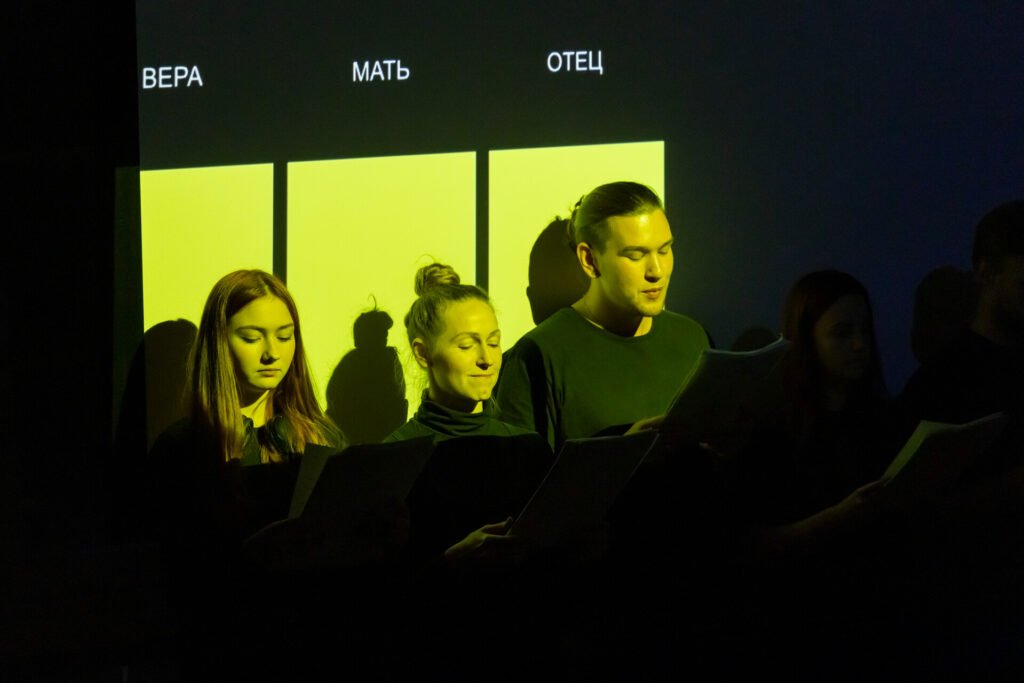
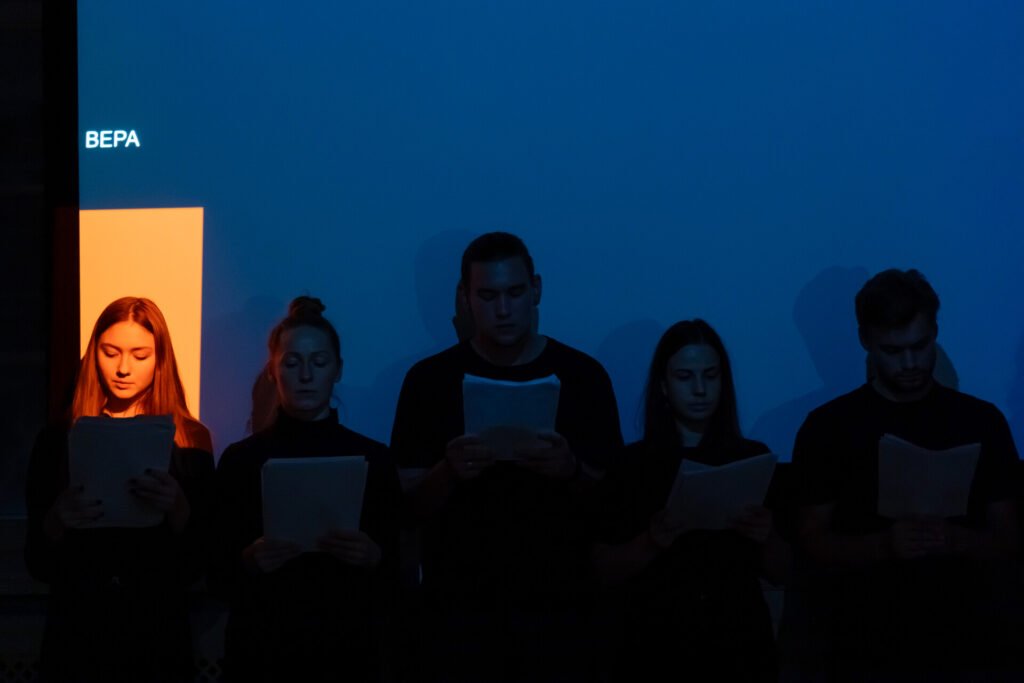
At the Druga Próba-2024 festival, one of the vivid statements was the staged reading “New Times” based on Barys Aliaksandrau’s play “A New Time”, directed by V. K. The play explores the life of a person in an authoritarian society, where fear and conformism become the norm, and the school becomes an instrument of ideological upbringing, replacing literature and history with “the Foundations of Spiritual and Moral Culture and Patriotism.” The dialogues look ordinary, but behind the naturalness one senses the absurdity and cold horror of everyday totalitarianism. Almost all the characters are driven by the desire to survive; only Vera, a recent university graduate, refuses to take part in the absurdity and disrupts the general order.
The play shows not only Belarus after the 2020 protests, but any systems where religion and school serve control, and history and culture are distorted. The main metaphor — the replacement of writers’ portraits in the literature classroom with portraits of the head of state — symbolises the destruction of culture and the creation of a new “gallery” of the era, in which people turn into voiceless images.
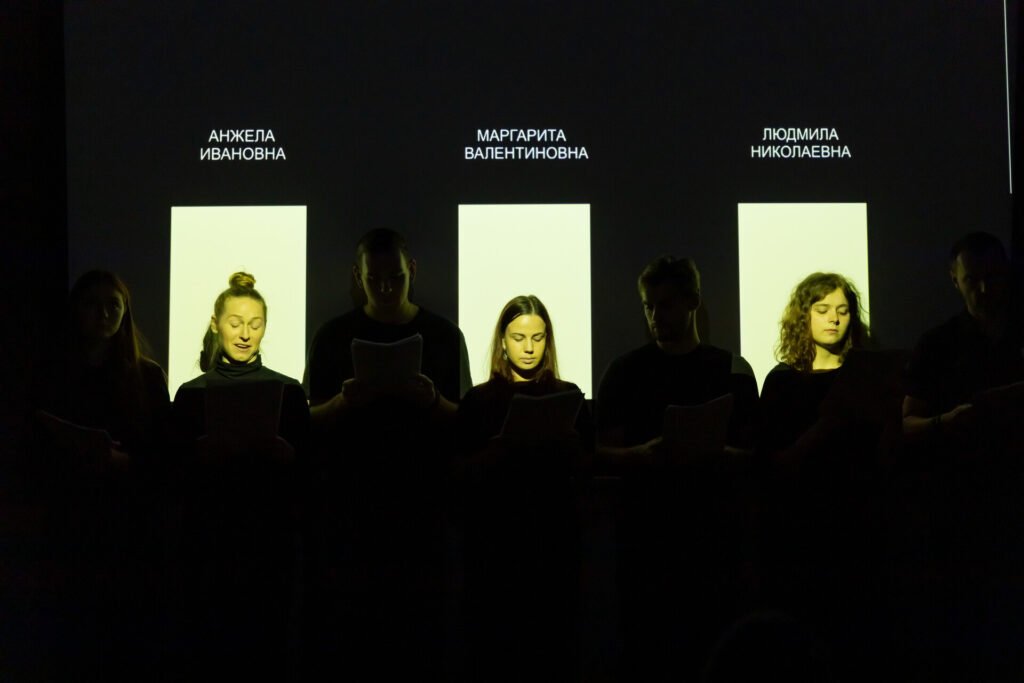
It was precisely this metaphor — the colonisation of consciousness through new forms of iconography — that the director used in staging the reading of the play. On stage the performers stood against a white background, and their faces were lit by rectangular fragments of light — like portraits set into frames. The visual device underscores the main meaning of the text: the terrible thing is not in the official propaganda, but in society’s readiness to accept it as the norm. Instead of masters of the word, the “saints” of the dictatorship now hang on the wall, and the main loss is the destruction of the critical gaze, of the capacity for moral doubt.
At Druga Próba-2025 the plays “Limbo” by Renata Talan and “A Bee in the Throat” sounded the loudest. The texts have no unambiguous political message, but they contain the pain of a person forced to live in circumstances they did not choose, which corresponds to the general problematic of the plays presented in this section.
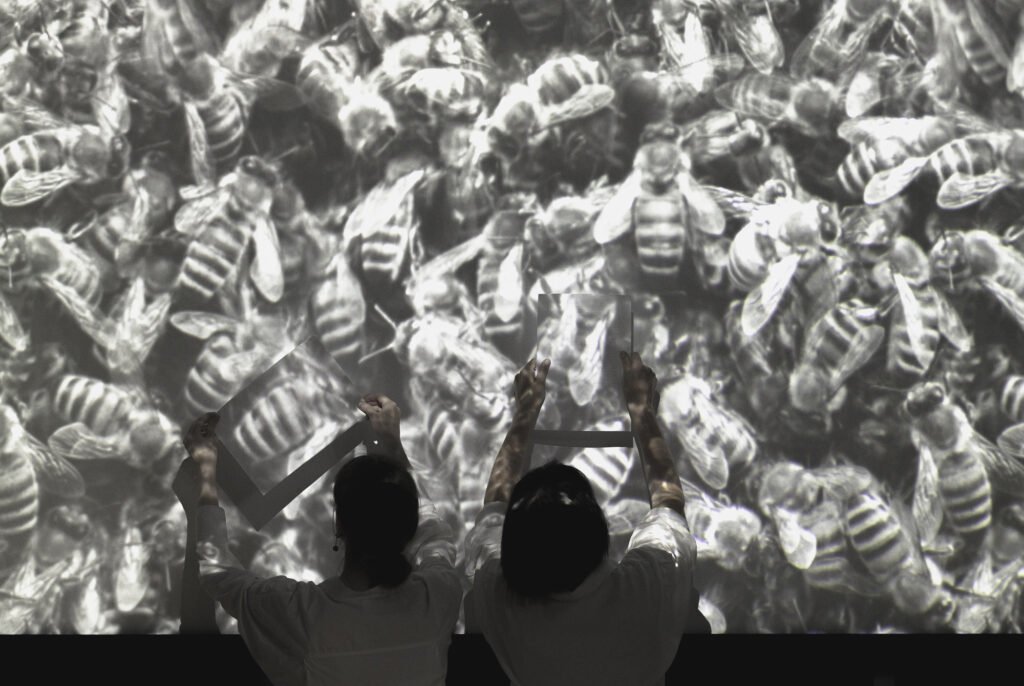
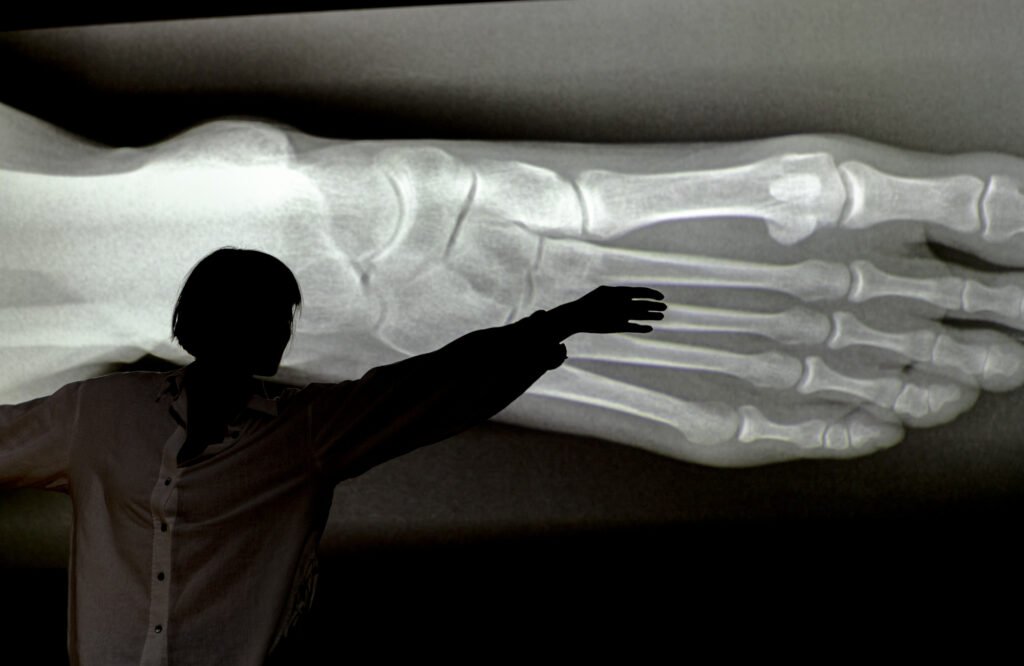
“A Bee in the Throat” is an example of dramatic poetry, in which lyrical subjectivity is revealed through an epistolary form: a letter to a friend. This makes it possible to heighten the intimacy of the utterance and to focus attention on the inner experience of a person living through the traumatic consequences of the events of 2020. The text explores the body as a source of vulnerability and potential strength: the motif of a fragile ankle turns into a metaphor of self-stabilisation, and the heroine’s body transforms: from small and delicate to powerful, like a tree breaking through the ceiling.
A separate place is occupied by the work with memory. The author describes it through the image of beads made of fragments of thoughts, sounds and colours, creating a metaphorical structure that gives chaotic memory form and texture. The elements of nature — water, fog, forest, bees — form an ecosystem in which the heroine seeks her identity and her connection to the territory. The theme of the loss of connection with those who are “not nearby” turns into the metaphor of a bee that has “lodged in the throat”, combining pain, silence and the need to speak. Gradually this image transforms into a collective Belarusian hive, scattered around the world but united by a shared experience and hope:
“And I will go on across that meadow… Across the meadow where new bees already ring and buzz, tenderly and loudly.”
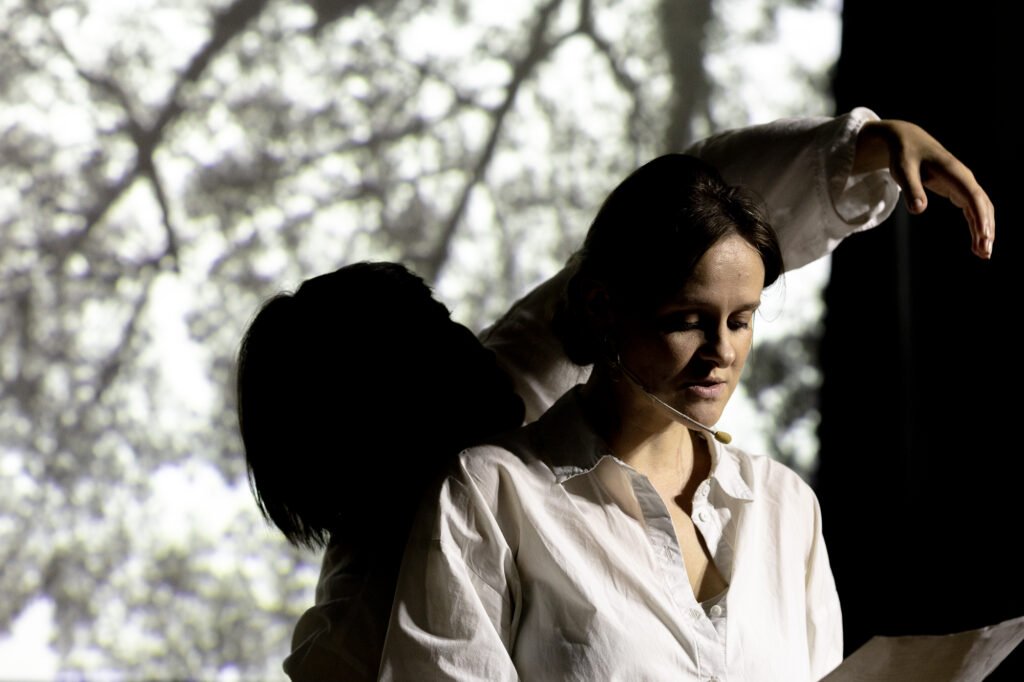
Director Natalla Levanava emphasised the corporeality and poetic nature of the text, incorporating extensive choreographic and visual elements into the production. The intonationally meditative reading by Hanna Sabaleuskaya was accompanied by the choreographic score of Anelia Kakosha, where dance embodied vulnerability, transformation and the striving for inner wholeness.
A large screen acted as a full-fledged participant in the action, intensifying the interpenetration of the physical and the metaphorical, the personal and the collective, the visual and the verbal. The black-and-white palette, projections of the body and of nature, the choreography and the text created a multilayered poetic atmosphere.
The structure of the staged reading was built on the dialogical relations between the two actresses — their convergences and divergences, their reactions to each other, their existence at different points of the space formed an image of a split consciousness, or of two aspects of a single subject. Thus the production acted as a scenic study of the corporeal and metaphorical nature of the play, showing the heroine’s path towards overcoming isolation and restoring connection — with herself, with others, with the “hive”, the symbol of community and the feeling of home.
Renata Talan’s play “Limbo” explores the consequences of the events of 2020 through a surrealist lens. The heroine lives in an intermediate state between life and death, where human ties are destroyed and the future loses its clear outlines. After 2020 the Woman loses her job, her friends and loved ones who go abroad; her connection with them exists only in correspondence. At the same time she finds herself in absurd, ritualistic interactions with the dead, organising funerals in place of absent relatives who were forced to leave Belarus and have no possibility of returning because of political persecution — not even for the funerals of their own kin. Thus the plot and metaphysical structure of the heroine’s inner limbo is formed — a place between worlds: between her former self and her present self.
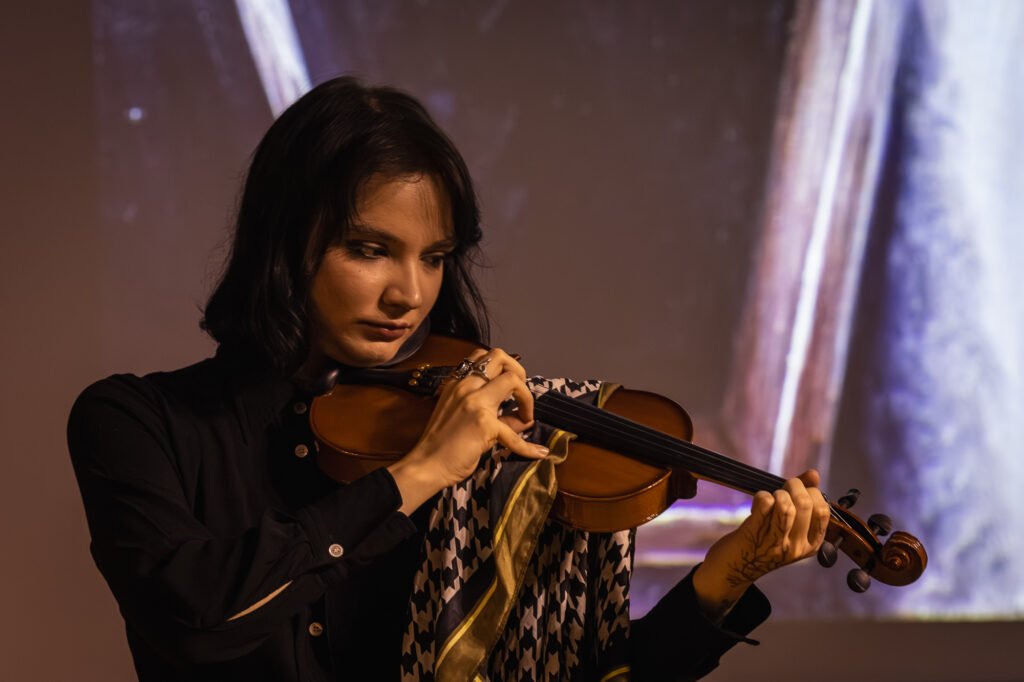
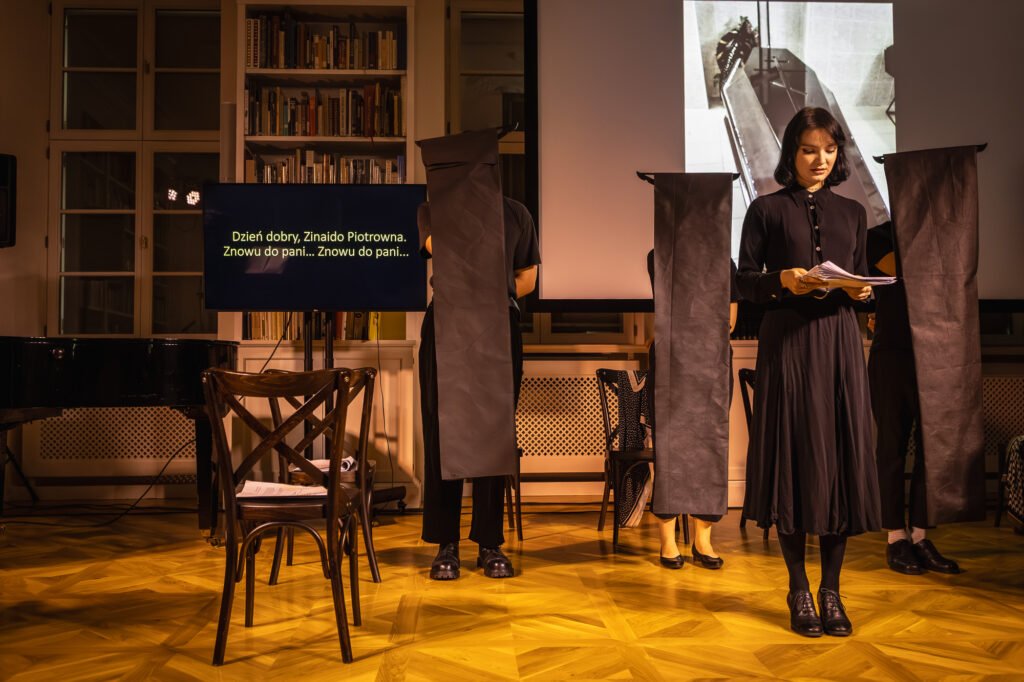
The staged reading directed by Valiantsina Maroz transfers the plot into a visual-surrealist space, where the reality of “those who left” and “those who stayed” coexists on a common field of death. The comic, the tragic and the absurd combine where human ties are broken and rituals lose their natural functions. The performer of the main role (Nika Zabela) conveys the state of limbo through restrained, ritualistic movement. She is dressed in a black dress associated with a funeral, and the kerchiefs she changes from time to time symbolise the multiplicity of identities and the change of masks the Woman is forced to wear.
The screen with photographs and fragments of text creates more than a backdrop: it functions as an acting character — the world of those who left. On the screen appear correspondences with friends who have turned from close people into dry clients of ritual services; the image of a coffin recurs regularly — sometimes photographically precise, sometimes as if drawn by a child’s hand. A deliberate “lowering” of the image of death takes place: sometimes comic, sometimes absurd, sometimes tragic. In this way the scenic language reveals the destruction of natural ties with death. The screen creates the impression that death itself passes into limbo — it is no longer sacred or final, it is increasingly only a “presence in the interface.”
The final scene of the reading embodies the main metaphor of the play — limbo as a living space between existence and non-presence. On the screen — an empty coffin with flowers, a space of absence; before it — a living Woman holding a violin in her hands: music, sound, which is still connected with life. The heroine, existing in a disrupted, “limbal” reality, in this scene seems to collide with her own shadow presence in the coffin — a moment of self-recognition in which it becomes obvious: the person was unheard to such a degree that they were symbolically struck out of their own life.
Thus the visual language of the reading echoes the essence of the play: the national identity of recent years is formed through the experience of loss and trauma, and the scene itself is a refined black-comedy allegory of Belarusian society after 2020, in which the living look at themselves as ghosts, and limbo becomes the only certain reality.
Common to all three texts is the exploration of the human condition under conditions of systemic violence and loss, while the difference lies in the chosen aesthetic strategies: from socially critical realism through poetic introversion to surrealist allegory. Together they form a multifaceted narrative about Belarusian reality after 2020, in which individual experience becomes the key to understanding the nationwide trauma and the ways of living through it.
Diasporic identity plays
In this section one play is presented that voices the Belarusian émigré community — “10 Hours Straight Home” by Yauheniya Davidzenka, staged by Natalla Levanava at Druga Próba-2024. The text conveys the personal experiences of emigration, loss and longing for the homeland, but ultimately shows a person’s desire to live on and to take joy in it.
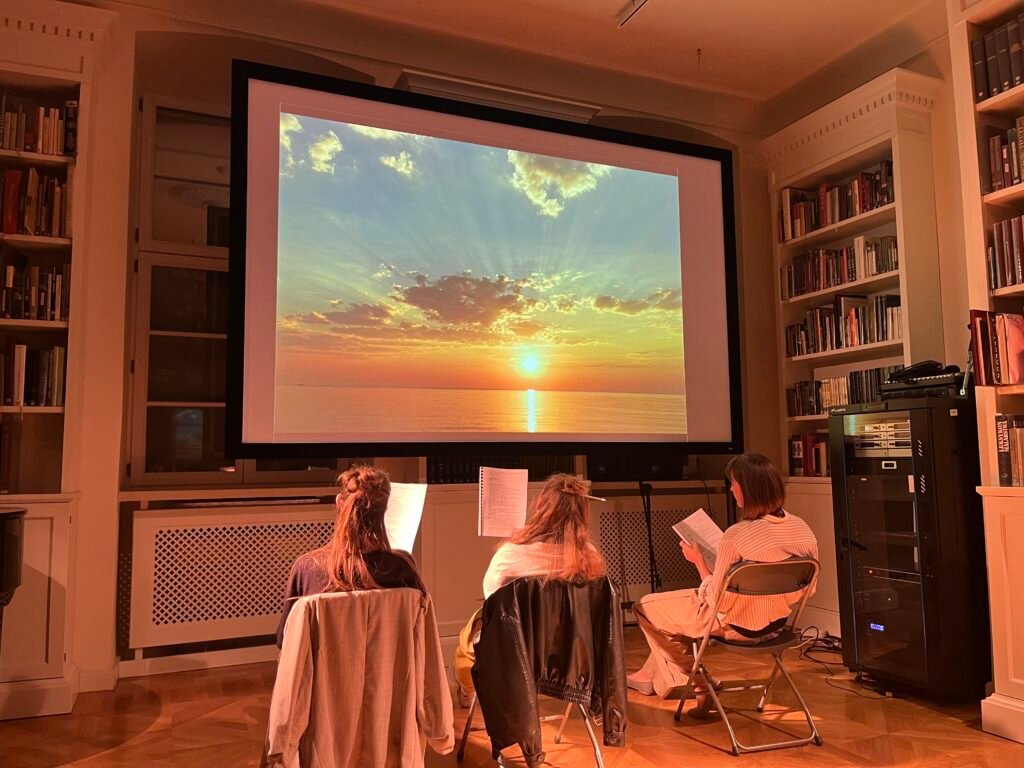
The action takes place on the shore of the Baltic Sea in Gdańsk, where three Belarusian women émigrées meet by chance. Although they don’t know one another, they quickly find themselves on the same wavelength: each was forced to emigrate after the events of 2020. The heroines, played by Hanna Sabaleuskaya, Natalla Levanava and the author herself, share their stories, sometimes watching, with silent sorrow, photographs of the sea, which becomes a symbol both of new prospects and of a past gradually disappearing beyond the horizon.
The staged reading transports the viewer into a space of personal and collective experience. The sea here is not just a backdrop but a metaphor of emigration: of a new life full of waves, and of an old one left behind, with pain, beyond the picturesque horizon. When the word coexists with the image, and silence says no less than the text, the reading turns into a powerful artistic act of memory, sorrow and hope.
At the second festival the premiere of a production staged by Davidzenka herself took place. The form retained a resemblance to the 2024 staged reading, but a more expressive visual sequence and refined scenic images were added. The intimate, trusting atmosphere remained unchanged, though the text itself perhaps revealed itself more confidently precisely in the format of a reading.
Liminal border-space plays
This section presents a text that reflects the space of the border and of transition, where new models of subjectivity are formed — Maryia Bialkovich’s play “Any Place Where Traces Remain”. It speaks of trauma and oblivion, of the possibility and impossibility of remembering violence. At its centre is not only the personal memory of the heroine, but also the collective memory of a people, which is being erased by fear, propaganda and the habit of “not getting involved.”
The main heroine’s amnesia looks like a survival strategy; she repeats: “I don’t remember.” Forgetting appears as a defensive reaction, but also as a metaphor for the state of a people losing its historical memory and roots. The text interweaves Belarusian, Ukrainian, Jewish and Polish traditions through languages, folklore, humour and songs, and a question arises: who are we and whose imprints of traces do we carry?
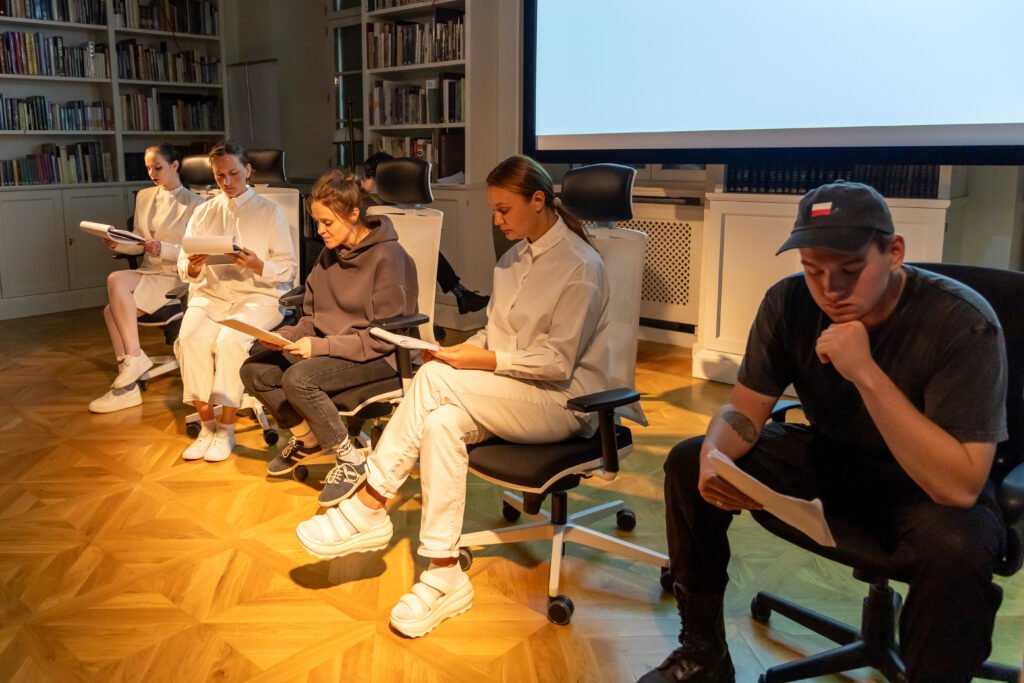
The staged reading (director Hanna Sabaleuskaya, Druga Próba-2024) conveys the multilayered structure of the play through movement and an ensemble of actors (Alyona Varaksa, Hanna Sabaleuskaya, Ryma Tyshkevich, Natalla Levanava). The form of the production — simultaneous mises-en-scène on a small space — creates an effect of fragmentariness, of scattered memory. The visual space works on the level of metaphor: shelves with books from the Raczyński Library form a scenography of memory, an archive breathing next to the viewer. The empty screen behind the actors’ backs becomes an important sign: a white canvas on which nothing is shown, because everything has been forgotten. It is a screen-void that requires a human voice in order to be filled.
The scenic statement is built on contradiction: an absurd, sometimes comic atmosphere stands against a horror that is not named directly. Through the figure of the Woman (Alyona Varaksa), who has lost her memory, the theme of interrupted continuity — generational, national and human — sounds out. Belarus in the play appears as a space where violence happens nearby, but no one is to blame for it. The final phrase, “None of this happened”, is not only the words of the play, but also an echo of a state and a society forbidden to remember. The events unfold in a transborder liminality, between reality and its distorted reflection, memory and oblivion, past violence and contemporary forms of resistance.
Speculative crisis plays
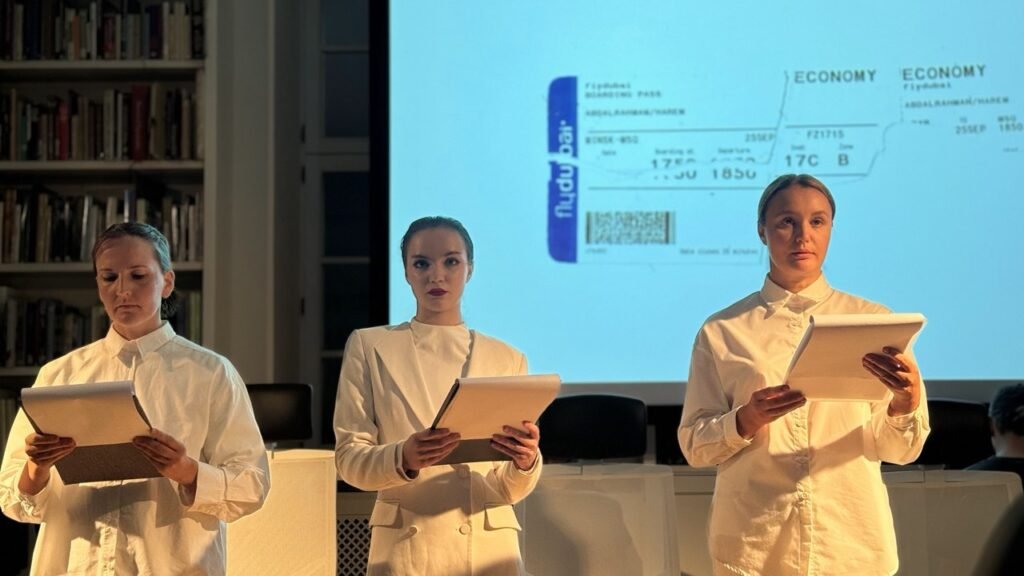
Another play, Say Hi to Abdo by Mikita Ilyinchyk, presented at Druga Próba-2024, builds a bridge between the present and a cruel future. The text combines dystopia, documentary and mockumentary theatre, lyrical fragments and performative playwriting, using video, audio, documents and invented testimonies, which creates an ironically distanced, mockumentary character.
The action takes place in post-Europe, in the so-called Euro-Islamic Union, where an institute of “Euro-Islamic Genocide” examines the case of Abdo — a man without a society, who has turned into a “living projectile” in the hybrid war on the border of Belarus and Poland. The play explores how migrants become an instrument of political pressure, and poses ethical questions about the boundaries of the narrative and the documentary.
The staged reading directed by Valiantsina Maroz preserved the laboratory coldness of the text: the stage appears as a sterile space of judicial investigation, where the lab assistants operate on human fates as on material. Against this backdrop the characters Natalla (Natalla Levanava), Tomasz (Ivan Turchanka) and Hanna (Hanna Sabaleuskaya) act as living conduits between the document and the human story. Their truthful, emotionally calibrated and very precise acting does not destroy the form but creates a dissonance between the invented structure and genuine pain, which becomes the main mechanism of impact on the audience.
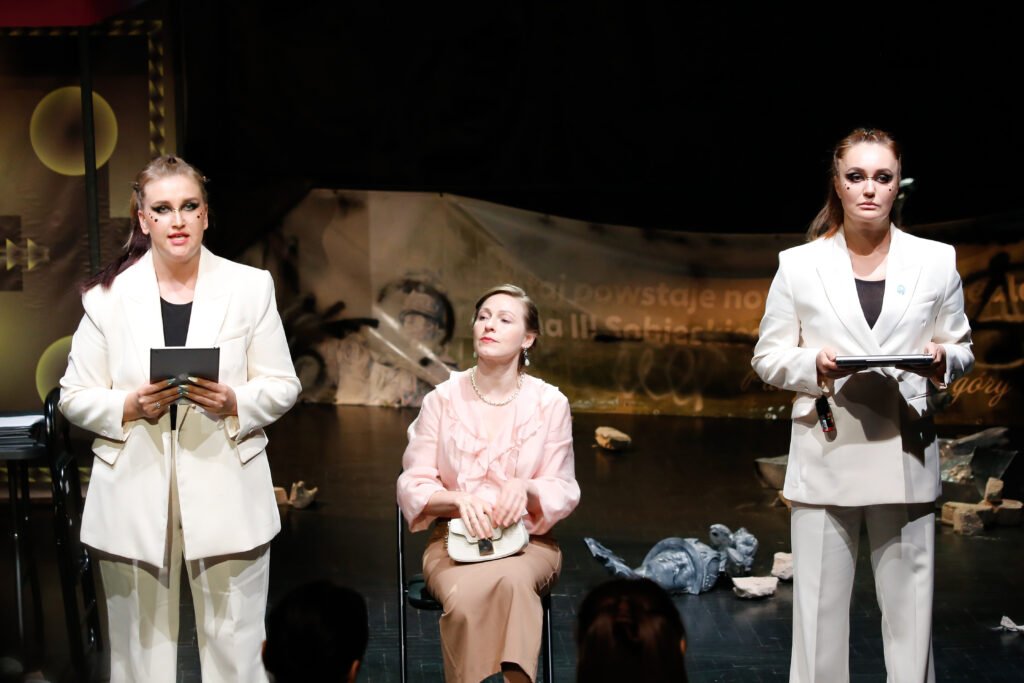
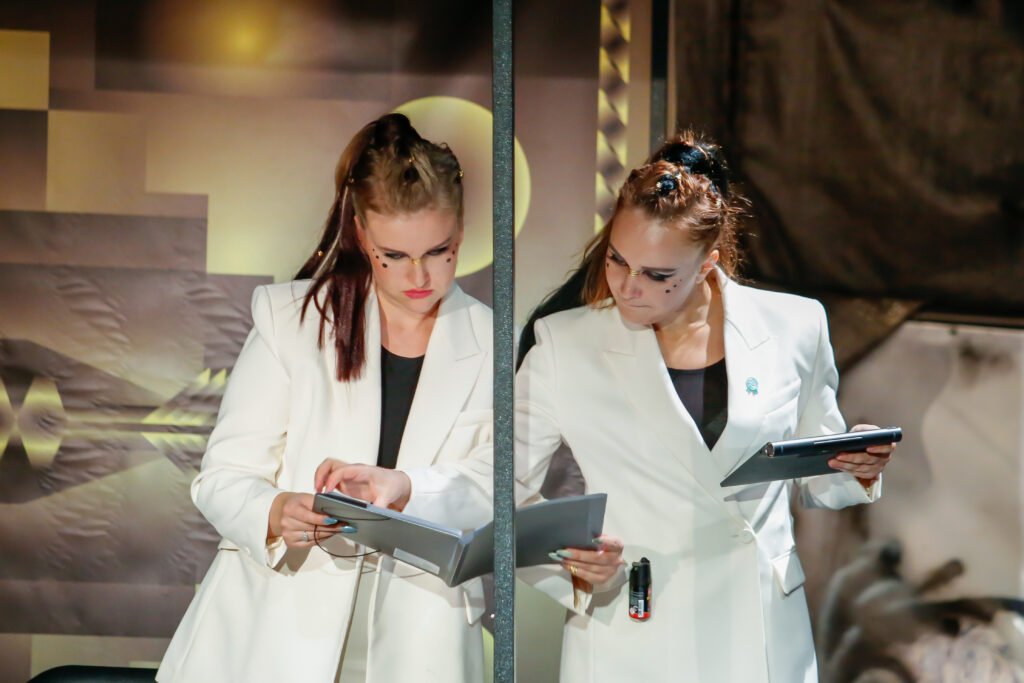
The premiere of the production took place at the second Poznań festival. The visual order of the production, created by the set designer Aliaksandr Adamau, differs fundamentally from the earlier cold, laboratory sterility. The stage was conditionally divided into two parts. In the first — a minimalist tent with the inscription “Euro-Islamic Institute of Genocide.” This segment belongs to the two Lab Assistants (Ryma Tyshkevich and Aliaksandra Saraeva), dressed in elegant white costumes, with elements of futuristic make-up on their faces. They represent the new power — the “Fem-Jihad” party, which acts as the mistress of life and conducts interrogations of those suspected of crimes against the new political order. By the rules, the heroines have no right to show emotions or reveal personal stories; yet their disdainful manners and postures betray their inner attitude more clearly than any words. Against the backdrop of the cheap tent their “representativeness” looks artificial and even grotesque.
The other half of the stage is occupied by peculiar fragments of civilisation: pieces of a destroyed monument, a faded poster, symbols of decline and ruin. It is here that the interrogations of those considered perpetrators or accomplices of the “hybrid war” take place. Their confessions seem extraordinarily alive, convincing and emotionally saturated. The “criminals” are real and recognisable people: a former travel-agency employee, Hanna (Alena Hiranok), defends her position with irony but assertively and confidently; a former border guard, Tomasz, demonstrates sincere incomprehension of why his actions are considered criminal; a volunteer, Hanna (Hanna Sabaleuskaya), openly and loudly accuses herself, finding no inner justification for her deeds.
On a narrow screen on the right appears the image of Abdo’s face — a person reconstructed on the basis of scattered fragments of information. He acts as a witness to the events and seemingly embodies objectivity, yet his testimony, too, proves unreliable: the structure of his memory is incomplete and therefore prone to distortion.
Thus a paradoxical situation arises in the production: the characters accused of crimes look far more human, appealing and convincing than the Lab Assistants — the representatives of the new just power, who act coldly and mechanically.
The production deliberately creates this visual and emotional contrast, skilfully manipulating the viewer’s expectations and initial judgements. Yet this manipulation has a positive, exploratory character: it forces one to doubt simple divisions into the guilty and the just, to trace the mechanisms by which judgements are formed, and also to become aware of one’s own vulnerability to constructions of power and informational narratives. It is precisely through this conscious disorientation that viewers gain the chance to see how easily and how often our perception is governed not by facts but by forms, contexts and the proposed frame of interpretation.
Staged readings as a search for the Belarusian voice
Contemporary Belarusian playwriting as represented in the émigré field becomes one of the most important instruments for making sense of Belarusian events after 2020, and also reflects the profound cultural, social and anthropological shifts caused by forced migrations. It is important to emphasise both the complexity of the political-cultural context and the need to record how the Belarusian community — inside the country and abroad — seeks new forms of artistic existence and new ways of speaking about trauma, memory and identity.
Staged readings in the Belarusian émigré space form a new, self-sufficient and theoretically significant form of theatrical thinking. They unite artistic exploration, civic testimony, documentary precision and performative freedom. As a result, a coherent cultural layer is formed that not only presents the experience of the Belarusian community but also inscribes it into a broader European context — where memory, resistance and the search for a voice become shared themes.
Thus, Belarusian staged readings in emigration are not just a temporary form of the theatre’s existence, but a most important stage of its transformation. They give playwriting the chance to be heard, directors the chance to experiment, organisations the chance to create new infrastructure, and viewers the chance to recognise and make sense of their own history. And it is precisely through this format that Belarusian theatre today reaches a new level of artistic and civic subjectivity.