Photos courtesy of the subject
On writing for the stage
I wanted to try my hand at playwriting back in Minsk. I watched various playwriting laboratories — rather from a director’s point of view, because sometimes I have trouble finding a conflict or building it up; zero-conflict systems are closer to me.
That’s my direction: I like it when nothing happens — I feel more symbolism in that.
It was interesting to approach creating a text in which the conflict is spelled out. I thought it would somehow help me step up to a new level in directing, and then I planned to return to conflictlessness again. Earlier, in Minsk, I worked a lot with texts, but more from an editor’s point of view: on the basis of someone else’s text I could make an adaptation or rewrite everything from beginning to end. Now I wanted to try writing a play with dialogue on my own — and so “10 Hours Straight Home” came about.
On the theme of emigration in playwriting
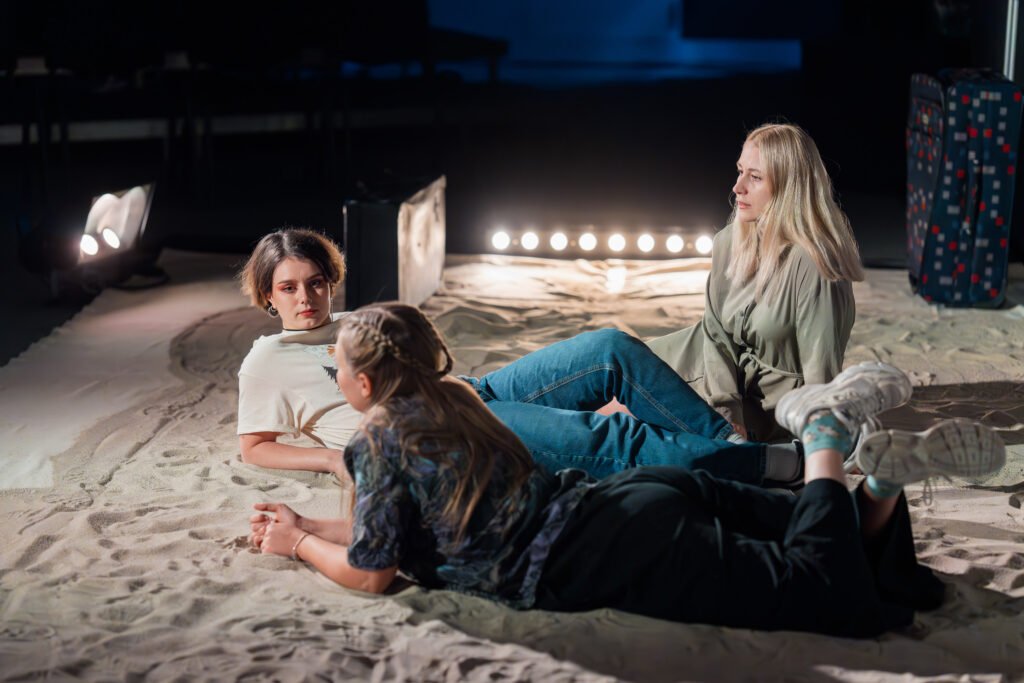
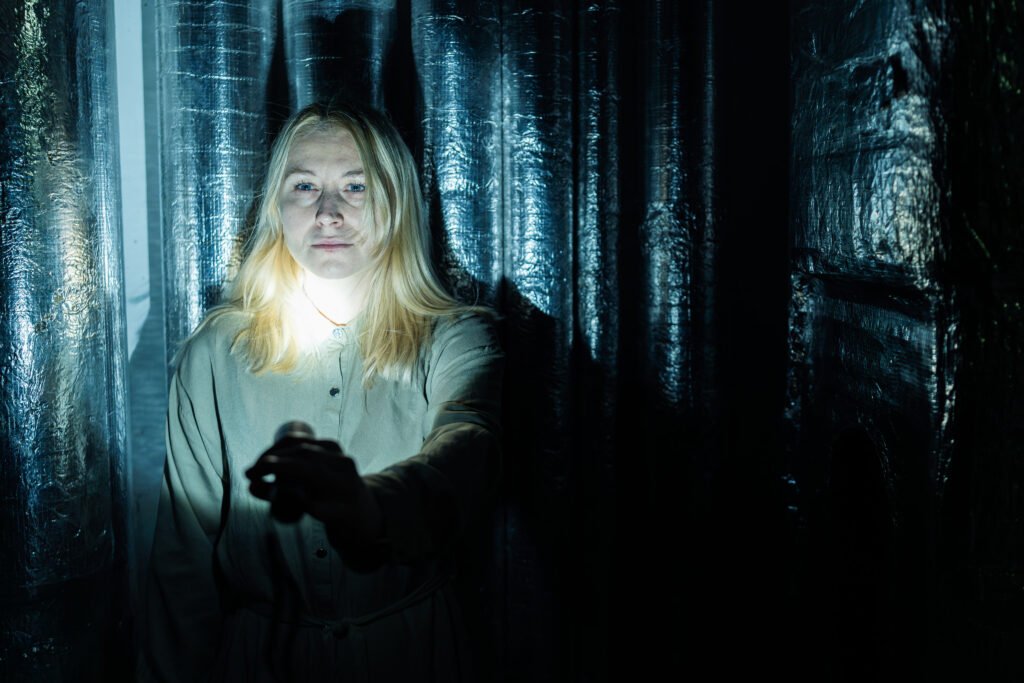
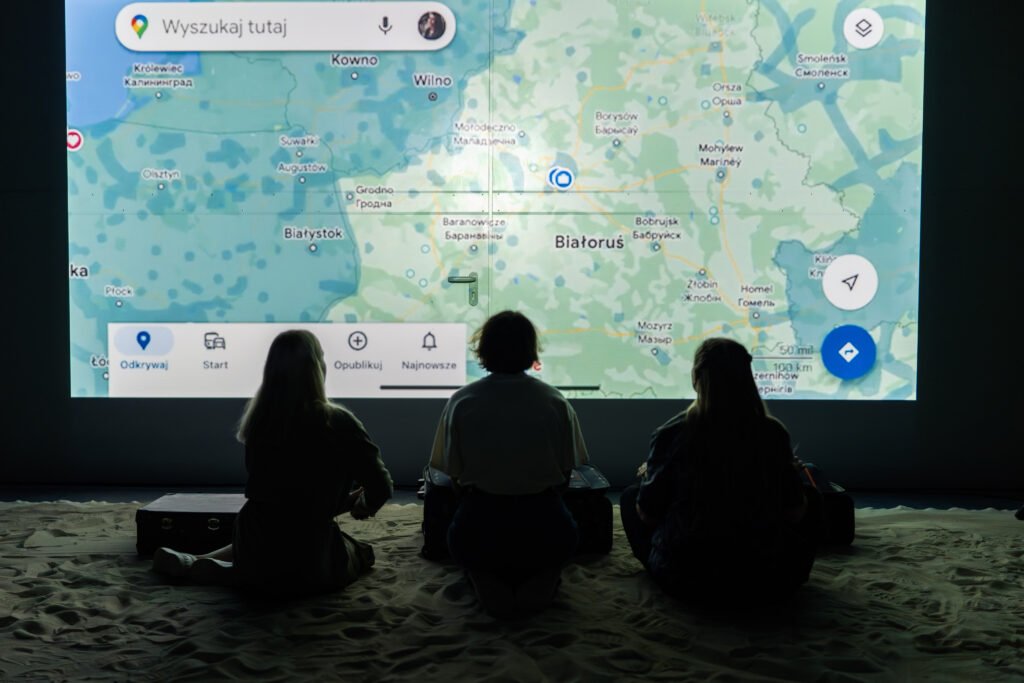
The paradox is that I never wanted to make anything about emigration. There’s always some lament about emigration: “Oh God, how sad.” Such suffering isn’t close to me. Of course, I understand that perhaps the psyche defends itself this way against pain and all the terrible things. It so happened that while working in a bar in Gdańsk, I heard many different stories and thoughts from guests or friends. Then I thought that very rarely does anyone reflect on what provoked the emigration in the first place. Some things, of course, lie somewhere in the subconscious. But Americans, for example, don’t think about the fate of Mexicans. Why do they become emigrants? And I decided to write the play “10 Hours Straight Home” about the fates of three Belarusian women who ended up in one place in emigration. For me personally it was important to reflect on this and to recall certain moments, so that, once uncorked, they could breathe out.
On choosing a language for a play
Once I started arguing with someone in the comments about this. I don’t like the nationalisation of language. I say this as a person who speaks Belarusian among people who often speak Russian. There is a language in our head. Something is written in Russian, something in Polish, something in Belarusian. This applies to both musical and dramatic texts. Yes, the play “10 Hours…” immediately sounded in Belarusian to me, even though almost no one speaks Belarusian in emigration. That, too, is a kind of lie. It seems to me the play was born in Belarusian because that worked from the point of view of conflict and themes. The play Niechęć (“Reluctance”) I wrote straight away in Polish, then edited and translated into Russian. For me it is absolutely not a Belarusian-language text. Polish is more sonically expressive; it’s interesting to play with its hard sounds, and secondly, it can create the same airless world in a text as Russian.
On national identity in one’s work
“Do I consider myself Belarusian?” — that is the kind of question that can arise. In general, it’s hard for me to stick any labels on myself. To call myself a director, I struggled for three to five years. I don’t like flaunting one’s passport identity; for me that is a zone of conflict. Of course, I was born in Belarus. From the point of view of documents, I am not Belarusian — I have no passport. From the Polish side, I am Belarusian. Looking at what I’m writing my next play about, I am a Belarusian playwright. So many assessments. That’s why the question “What is Belarusian playwriting?” is not simple for me. It’s unknown whether my texts will be included in Belarusian anthologies.
On the themes that feel close now and why you explore them in plays
Often, thinking about the evil in the world, I wondered where it comes from. In the play “How to Get Rid of Shame, or Unlove” it was interesting to create a space of unlove and to understand whether it could be transformed into love without deliberately adding conflicts. It seems to me there are no conflicts or arguments in unlove. In Polish there is a good word, „niechęć” (reluctance) — it’s when you want nothing, a kind of indifference, when in the space of unlove nothing grows, there’s nothing there. It was interesting to ponder what might come of it next.
In the drama Echo kamienic (“Echo of the Tenement Houses”) my deep love for Gdańsk, for one of its old districts, came through. Reading about the past of Silesia or Pomerania, I realised that I find more connections that identify me than in the stories of Belarusians from Podlasie. Of course, this may have to do with me as a person. For me the history of the Tricity became a reflection of what was happening both with Belarus in general and with what I was living through personally. Right after moving I couldn’t tell them apart. When I began to research where, whence, why — the Solidarity movement, the constant redivision of territory — I felt in these lands a kind of no-man’s-ness. Whatever era you take, from the first photographs of the Lower Town, war is constantly going on: here a regiment arrives, there it departs; the ceaseless struggle of Prussians, Germans and Poles over these lands and this region’s attempt to be some other region. And all the while people search for their roots in these distant territories, they simply want to love and to live, while war and political change never end.
On theatre-and-music projects based on Belarusian material
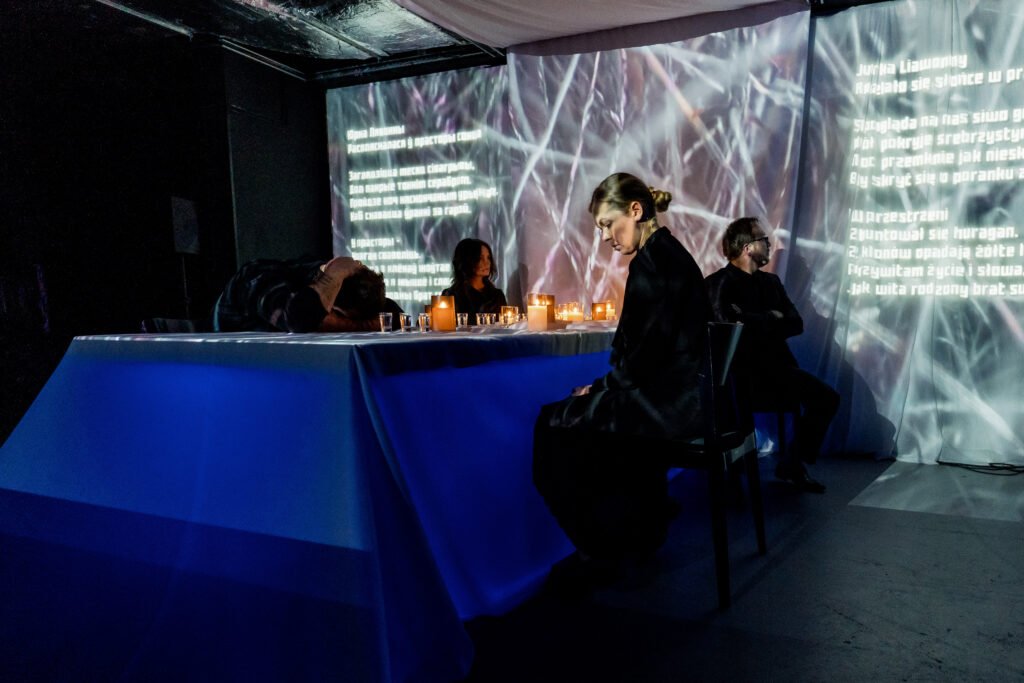
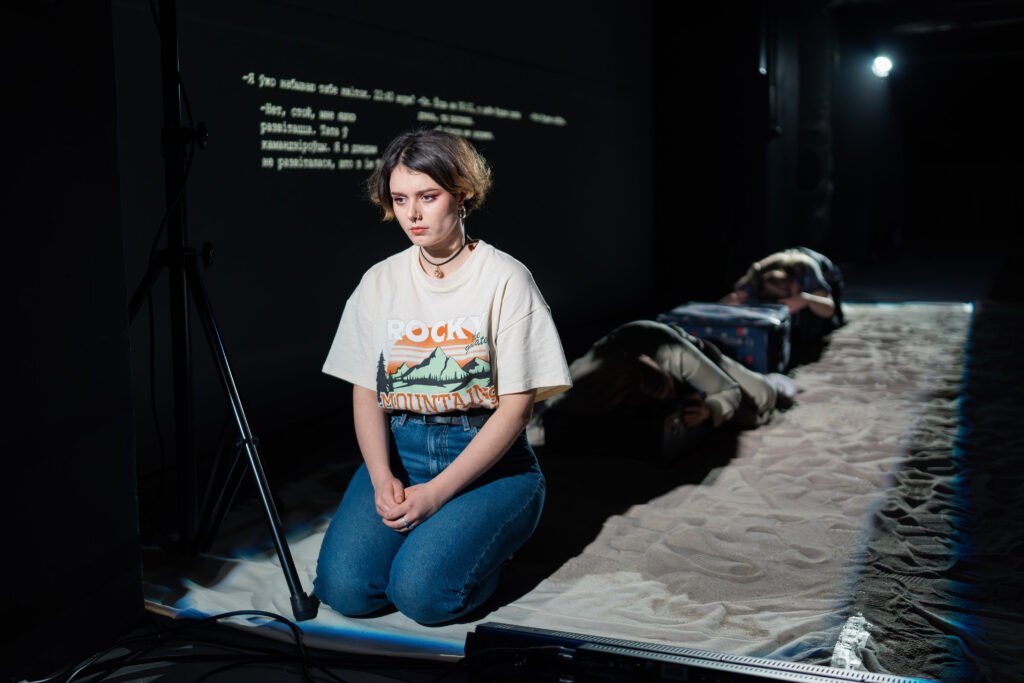
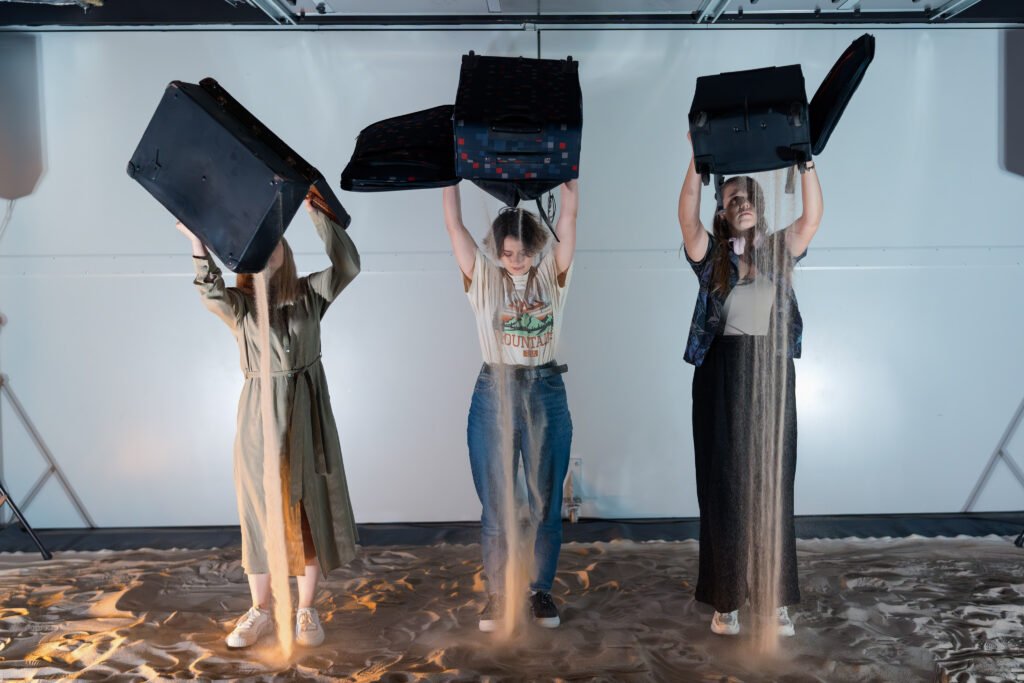
Here dreams and desires connected with my unrealised side as a musician came together. I love music very much. One of the critics who attended three of my readings remarked, “Oh, you pay a lot of attention to music.” That’s a feature of how I perceive texts. The poetry of executed poets became the musical performance “Rozstrzelani” (“The Executed”). If I had a lot of money and the necessary skills, the Belarusian play “I Will Come Out of the Forest, Take Out My Spine, and It Will Serve Me as a Sword” would be a visual opera, but with minimalist means it turned into an album of singles and music videos, “Khrybiet” (“Spine”). Based on the diaries of Anastasiya Rydleuskaya, a music-and-visual performance came about, which we showed in Gdańsk at Karma Bar and in Poznań at the bar MY. I combined the memories of a Belarusian artist about the events of 2020 in Belarus, my own emigration and friends, war and depression into a poetic text, wrote music for it and performed it.
On recognition and competition
When I found out that I had made the longlist [of the Dramatyzacyja competition — ed.], I smiled. I have enormous problems assessing myself. It seems to me that many people think someone did it better than they did, that what they have isn’t enough yet. One of the reasons I keep doing this is to drown out those inner voices. It takes a little time just to say to yourself: “Great, well done!”
It seems to me that the existence of a Playwriting Competition matters. Something interesting can grow on that basis. The existence of institutions and competition encourages the appearance of new works and projects. Such a practice is widespread in Poland. Over time, a prestige of taking part and winning will emerge.
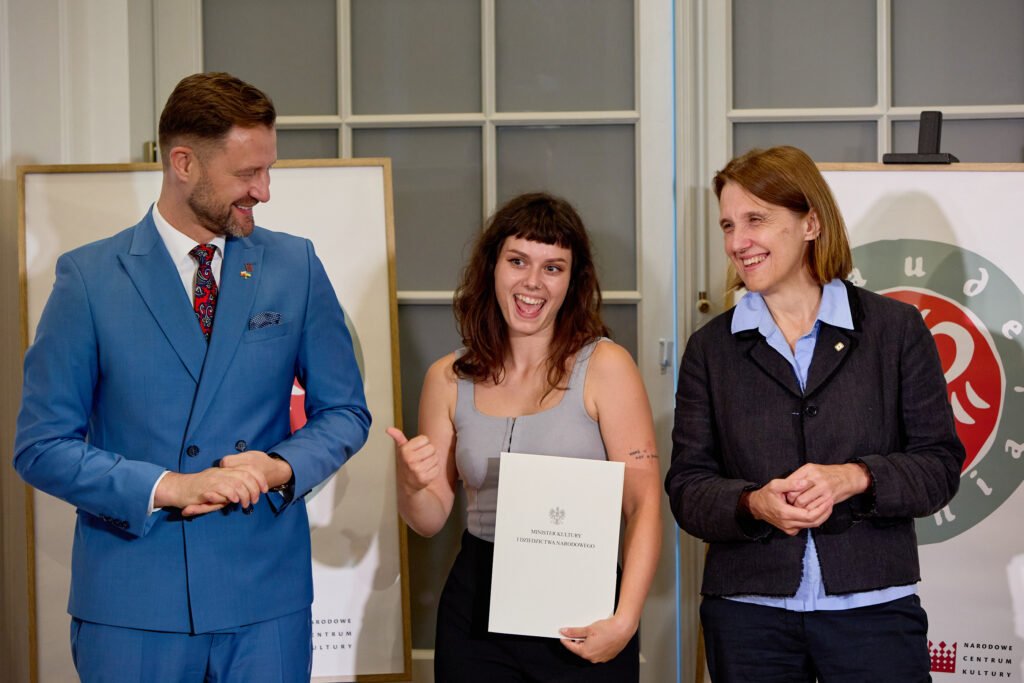
The project she won the GaudePolonia Scholarship with
I was working on Nadberezyńcy by Florian Czarnyszewicz. Mikita Ilyinchyk recommended this epic novel to me, about the life of the gentry by the Berezina River in the early 20th century. When I talked about this book with a Polish philologist, she was amazed: “Goodness, what boring books you like” — but I really did like it. I reread this enormous novel three times in order to make a stage adaptation about life in the borderlands of the so-called Eastern Borderlands (Kresy Wschodnie). What moved me, probably, was the verbal documentation of life at that time.
On the performative reading of the Belarusian play “K*rwa” in Warsaw
Times have changed; you can really feel how the ethics around the subject of women, the language of expression and audience perception are shifting.
When we did a reading of the same text in Minsk 6 years ago, there wasn’t this kind of care for the audience. Now it was hard to allow ourselves to use certain turns of phrase. For the fem-art festival ROAR WOMEN this play fits very well. It was interesting to look, from the distance of time, at how such a strong, controversial text would sound from a contemporary point of view. There are many fine Belarusian plays, but not so many people know them. We did the performative reading with Polish subtitles, because Polish society is interested in Belarusian playwriting, and we wanted to show its distinctiveness.
On ritual in the process of writing plays
I’ve already switched into an old-person mode: I fall asleep earlier and wake up at seven or eight in the morning. Physically it suits me better. When I write, I really love doing it at night. I don’t know how people manage to do anything during the day apart from capitalist matters (laughs) — like working, going to the gym, and then on top of that doing creative work. That’s not my style. I like to sit at home, light a candle, put on strange music. And in the silence, when no one will message you, when you don’t have to check your phone and email, I begin to write. True, restlessness gets in my way — I can write, then remember something, google it, but with effort I bring myself back to work. At night, time is perceived differently. When it’s important to finish something, I can work until the very morning — then there’s sometimes a passage into the meaningless, but afterwards I return to the meaningful. Sometimes these peculiar marathons happen.
On the important meanings in her work that will matter in the future
Everything I think about and do is so that people feel hope and strength, can come to terms with themselves, so that they have a desire for love — and, in general, so that love exists and multiplies, because without that, what we see now happens.